Displacement and Contested Statecraft: Refugee Rehabilitation in West Punjab (1947–1970)
DOI:
https://doi.org/10.65463/49Keywords:
Refugee Rehabilitation, West Punjab, Evacuee Property, Gender, State FormationAbstract
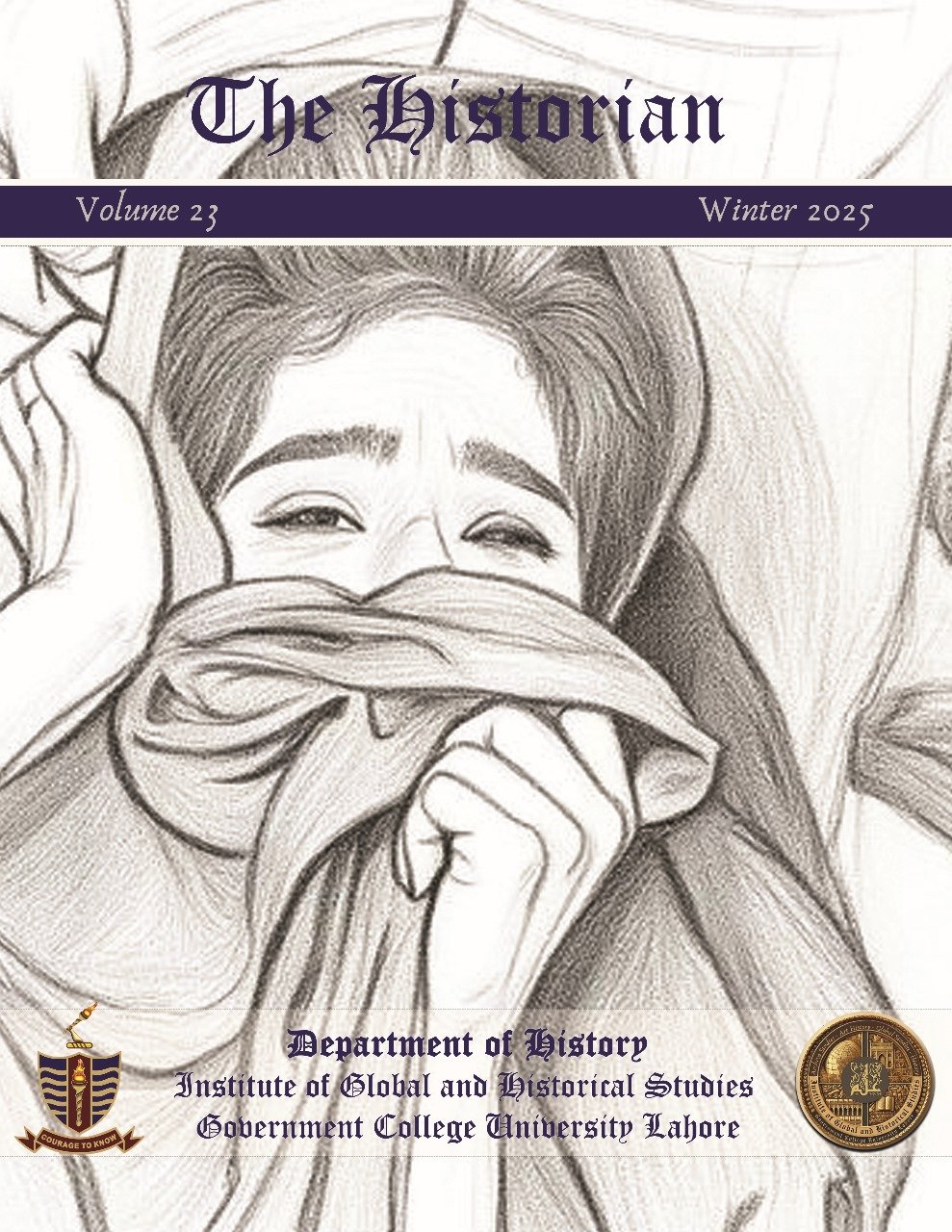
I examine the Pakistani state's response to the Partition refugee crisis in West Punjab between 1947 and 1970, which constituted one of the largest coerced migrations of the twentieth century. I propose that although official policies-including those establishing the Custodian of Evacuee Property and land redistribution programs-aimed to rationalize resettlement, they were fundamentally compromised by severe bureaucratic failure, corruption, and inherent social inequalities. This study asserts that a massive disjunction existed between state rhetoric, which promoted justice and national unity, and the lived realities of displaced communities. I suggest that refugees were not passive recipients of aid; instead, they emerged as active political agents who contested bureaucratic oppression, negotiated for property claims, and utilized legal and political avenues to assert their status in the nascent nation. I also examine the gendered experiences of rehabilitation, revealing that women faced distinct forms of institutional exclusion and trauma that the state mechanisms largely failed to address. The rehabilitation process was thus a contested and transformative crucible that indelibly marked West Punjab's institutions, demographics, and post-colonial political identity.
Downloads
Downloads
Published
Issue
Section
License
Copyright (c) 2025 FOZIA BUGTI (Author)

This work is licensed under a Creative Commons Attribution-NonCommercial-NoDerivatives 4.0 International License.